The Future Homes Standard (FHS) is set to redefine how new homes in the UK are designed, built and heated. Its primary goal is to significantly reduce CO₂ emissions by encouraging low-carbon heating, high-performance insulation and intelligent energy management.
For manufacturers and innovators like Nanoheat, this shift confirms a clear direction: the future of residential heating lies in advanced electric technologies combined with efficient insulation and smart control.
Future Homes Standard: Electric Heating, Insulation and Low-Carbon Technologies Explained
The Future Homes Standard (FHS) is transforming the way new homes in the UK are designed, built and heated. Its core aim is to reduce carbon emissions by promoting low-carbon heating systems, high-performance insulation and intelligent energy management.
As a result, modern housing increasingly relies on electric heating technologies, including far infrared heating, combined with effective insulation and smart control. This shift strongly aligns with the technology focus of Nanoheat.
What Is the Future Homes Standard?
The Future Homes Standard is a UK regulatory framework designed to ensure that new residential buildings are significantly more energy efficient than those constructed under previous regulations.
Specifically, it focuses on:
-
reducing heat loss,
-
lowering overall energy consumption,
-
encouraging low-carbon electric heating systems,
-
improving thermal insulation across floors, walls and roofs.
Moreover, these requirements are expected to be introduced gradually between 2025 and 2027, meaning developers and homeowners must already plan for compliance.
Heating in New Homes: Moving Beyond Gas Boilers
Importantly, the Future Homes Standard does not require the replacement of existing gas boilers. However, when it comes to new-build homes, the situation is fundamentally different.
Increasingly, new properties are designed with:
-
electric heating systems,
-
heat pumps,
-
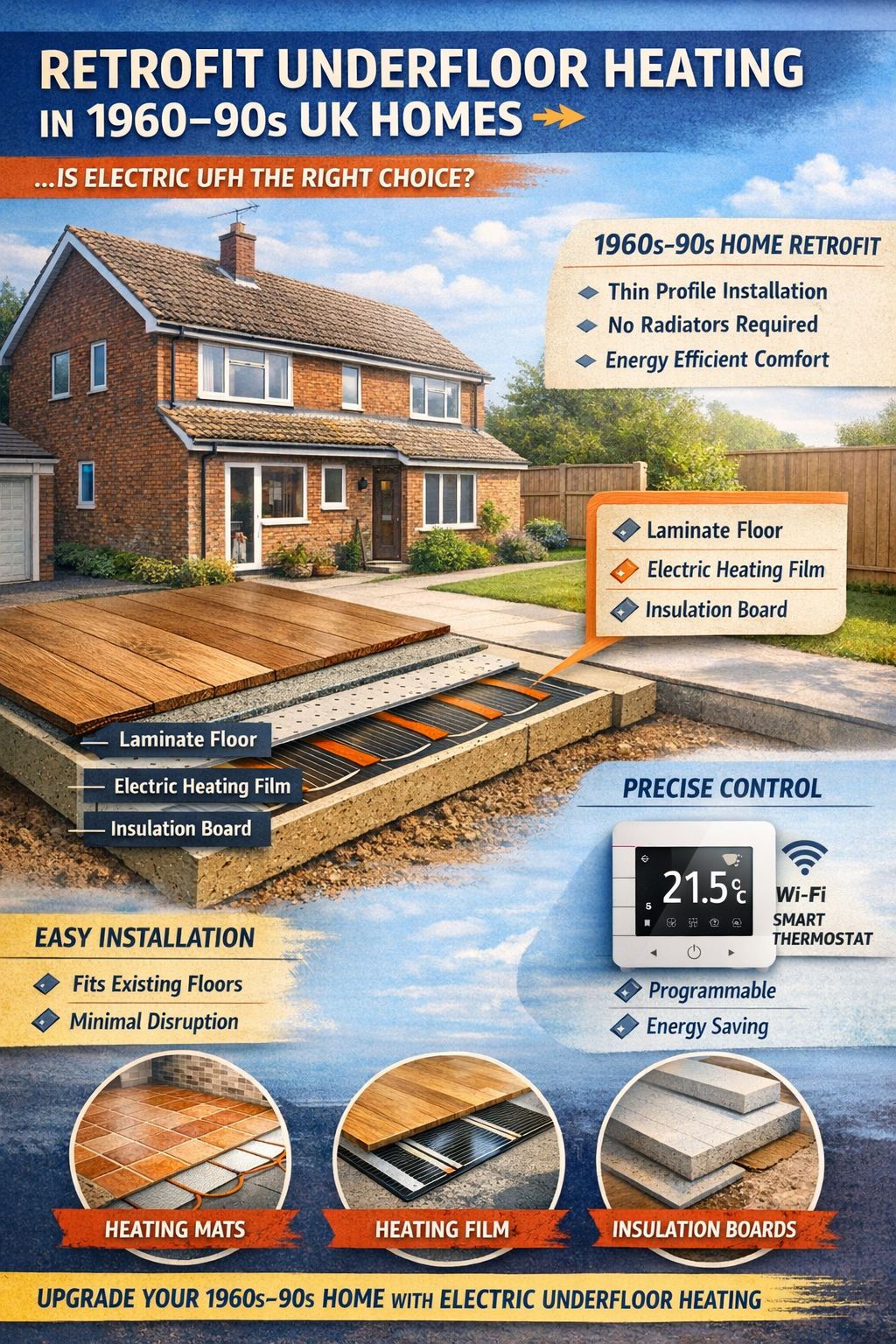
electric underfloor heating,
-
enhanced insulation standards.
Consequently, gas boilers are becoming less suitable for new homes, as they struggle to meet long-term carbon reduction targets.
Electric and Far Infrared Heating as Future-Ready Solutions
Modern electric heating systems play a key role in achieving Future Homes Standard targets. In particular, far infrared heating technology offers a highly efficient and flexible approach to space heating.
When combined with good insulation and smart control, electric and far infrared heating systems provide:
-
zero on-site emissions,
-
precise temperature regulation,
-
fast response times,
-
compatibility with renewable electricity,
-
low maintenance requirements.
Therefore, Nanoheat far infrared heating systems are well suited to low-carbon homes designed for future regulations.
Insulation: The Foundation of Energy-Efficient Homes
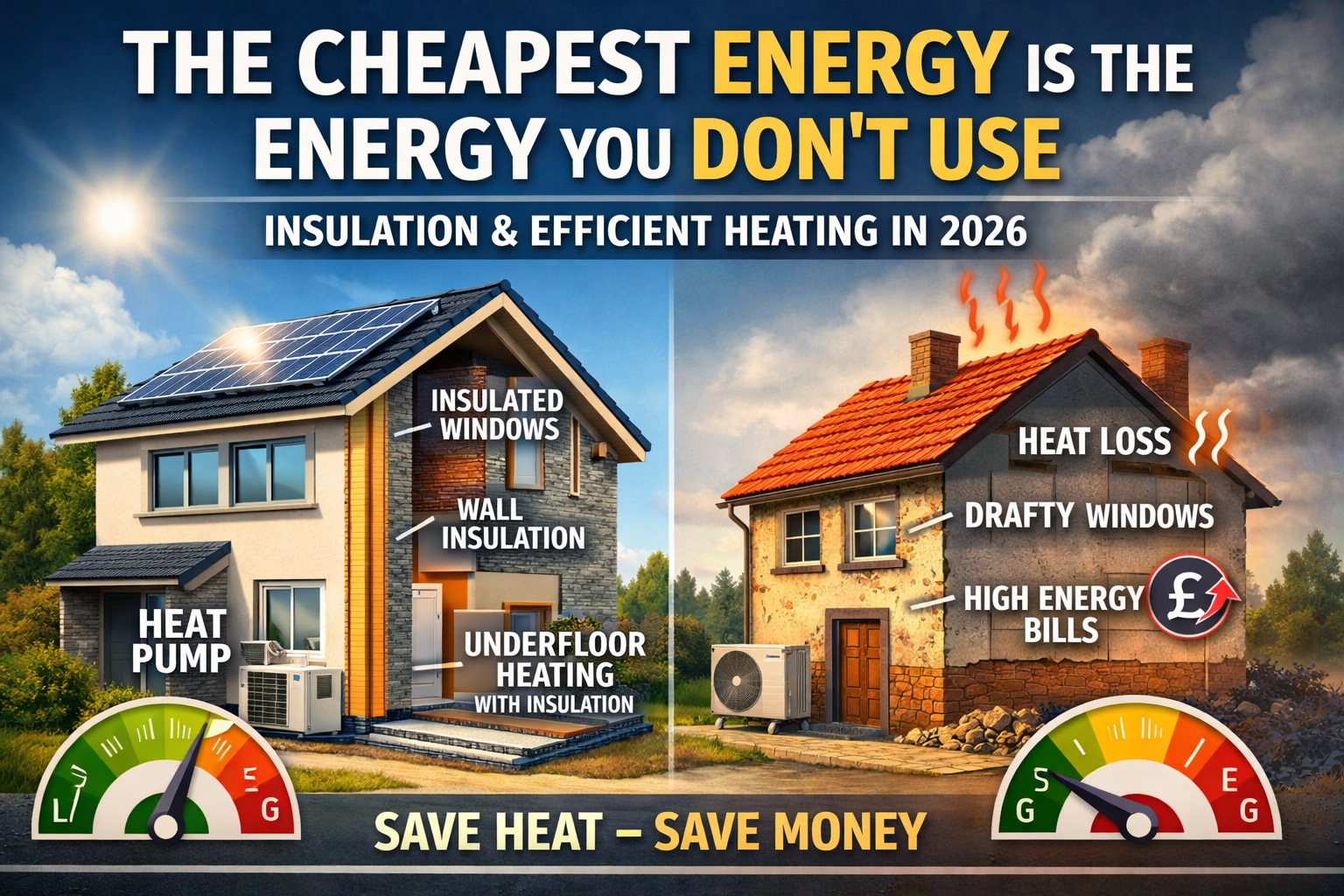
Equally important, the Future Homes Standard makes it clear that heating efficiency depends heavily on insulation quality.
High-performance insulation:
-
reduces heat loss,
-
lowers energy demand,
-
improves indoor comfort,
-
enhances the efficiency of electric heating systems.
For this reason, insulation is not an optional extra but a core element of any low-carbon heating strategy. Nanoheat solutions are designed to work as part of a complete system, not in isolation.
Smart Control and Energy Management
In addition to heating and insulation, the Future Homes Standard highlights the importance of smart energy control.
This includes:
-
programmable thermostats,
-
zone-based heating control,
-
scheduled temperature settings,
-
integration with smart home systems.
As a result, homeowners can reduce unnecessary energy use while maintaining comfort. Intelligent control also ensures that electric and far infrared heating systems operate at maximum efficiency.
Nanoheat: Advanced Technologies for Low-Carbon Homes
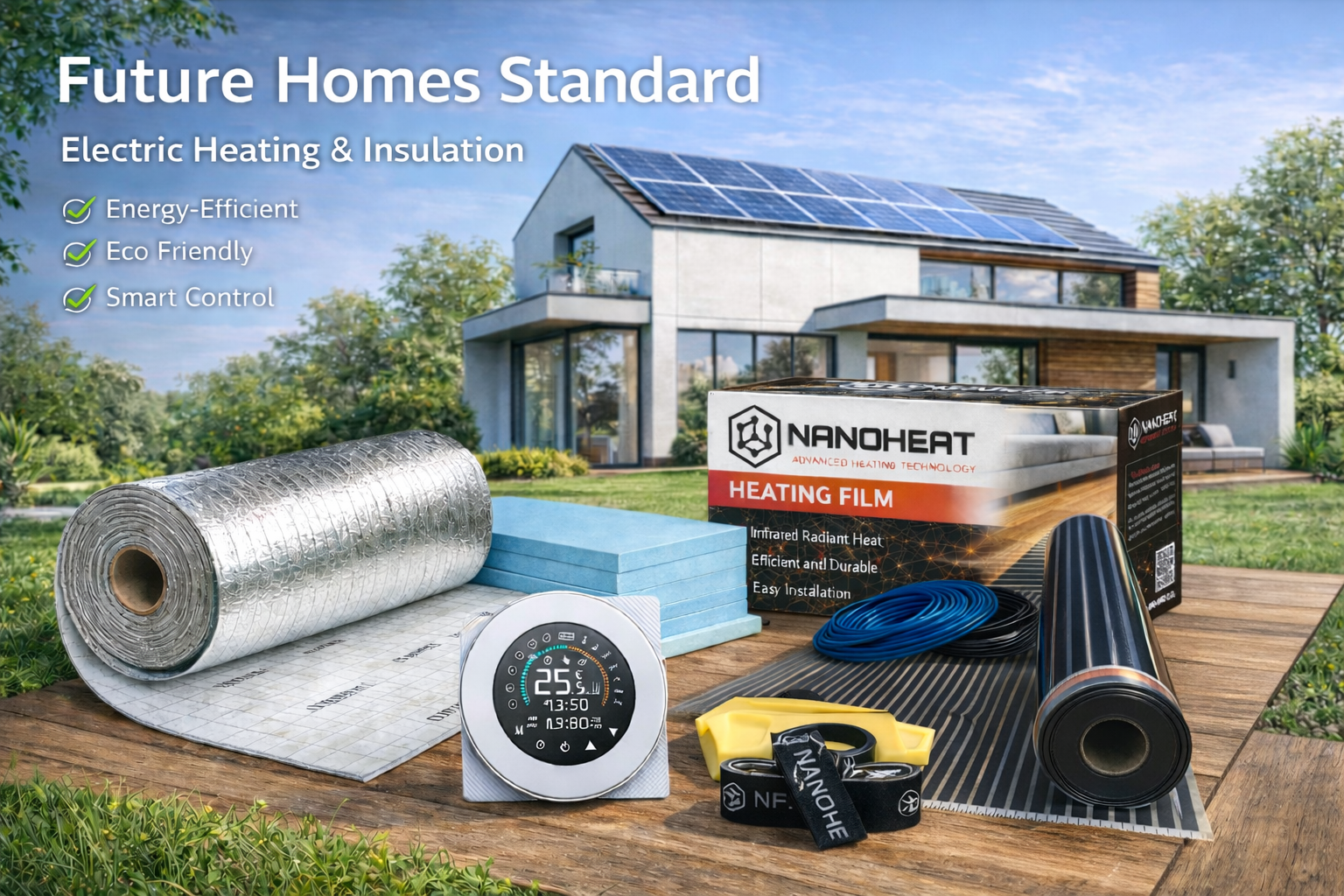
Against this background, Nanoheat develops advanced far infrared electric heating technologies tailored for modern, energy-efficient homes.
Nanoheat solutions focus on:
-
low-carbon electric heating,
-
far infrared technology,
-
compatibility with Future Homes Standard requirements,
-
integration with insulation and smart control systems.
By combining these elements, Nanoheat supports a holistic, system-based approach to energy efficiency.
Conclusion: Preparing Homes for the Future
In summary, the Future Homes Standard confirms that the future of residential heating depends on:
-
high-quality insulation,
-
low-carbon electric and far infrared heating,
-
smart energy control,
-
integrated heating systems.
As new homes move away from fossil-fuel-based solutions, technologies offered by Nanoheat are already aligned with the next generation of energy-efficient housing.